The United Kingdom remains one of the most attractive destinations for global entrepreneurs and investors. Boasting a stable legal framework, a competitive tax regime, and a reputation for ease of doing business, the UK offers a fertile ground for startups and established enterprises alike. Fortunately, the UK government does not impose residency or nationality restrictions on those wishing to incorporate a company. This guide provides an in-depth analysis of the steps, requirements, and considerations for non-residents looking to establish a legal business presence in the UK.
1. Understanding the Legal Landscape






Registering a business in the UK as a non-resident is a remarkably streamlined process compared to many other jurisdictions. The primary authority governing business registration is Companies House, the UK’s registrar of companies. For most non-residents, the most viable and efficient business structure is the Private Limited Company (Ltd).
Unlike a sole proprietorship, which requires the individual to be physically present and registered for tax as a resident, a Private Limited Company is a separate legal entity. This means the company can own assets, enter into contracts, and be held liable for its own debts, providing a layer of protection for the owners. There is no requirement for a director or shareholder to live in the UK, making it the gold standard for international business operations.
2. Choosing Your Business Structure
While several structures exist, two are most relevant for non-residents:
- Private Limited Company (Ltd): Most common. It requires at least one director and one shareholder (who can be the same person). Liability is limited to the amount invested in shares.
- Limited Liability Partnership (LLP): Often used by professional services like law or accounting firms. It requires at least two ‘designated members’ and offers limited liability but is taxed differently (transparency).
- Corporation Tax: Currently ranging between 19% and 25% on profits.
- Value Added Tax (VAT): You must register if your UK turnover exceeds £90,000, though you can register voluntarily if it’s lower to reclaim VAT on business expenses.
- Annual Accounts and Confirmation Statements: Every year, you must file financial accounts and a ‘Confirmation Statement’ (verifying company data) with Companies House, regardless of whether you have traded or not.
For the vast majority of international trade and digital services, the Private Limited Company is the recommended choice due to its simplicity and global recognition.

3. Key Requirements for Incorporation
Before initiating the registration process, you must gather several pieces of critical information. Even as a non-resident, these elements are non-negotiable:
A. Company Name
Your name must be unique and not ‘too like’ any existing name on the Companies House register. It must end with ‘Limited’ or ‘Ltd’. Certain sensitive words (e.g., ‘British’, ‘Royal’, ‘University’) require special permission.
B. Registered Office Address
This is perhaps the most important requirement for non-residents. Every UK company must have a physical address in the UK where official mail from Companies House and HMRC (Her Majesty’s Revenue and Customs) can be delivered. This address is public record. Since you do not live in the UK, you can use a Virtual Office Service or a Registered Office Service provided by many formation agents. This provides a professional UK address while you operate from abroad.
C. Directors and Shareholders
You need at least one director (a person responsible for managing the company) and one shareholder (the owner). As a non-resident, you can fulfill both roles. You will need to provide personal details, including your full name, date of birth, nationality, and service address (which can also be the virtual office address to keep your home address private).
D. Standard Industrial Classification (SIC) Code
You must select a code that describes what your business actually does. This helps the government categorize the economic activity of the nation.
4. The Registration Process
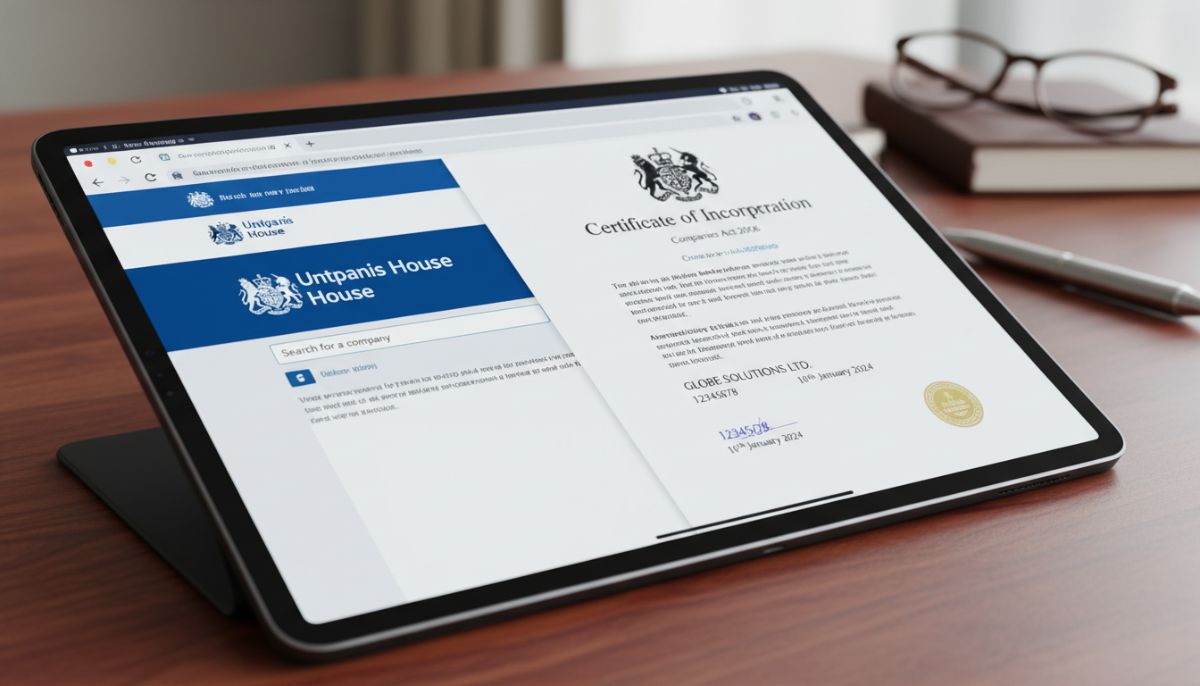
Once you have your address and details ready, the registration process can be completed online. Most non-residents use a professional formation agent or a legal service to ensure accuracy, though it can be done directly through the government’s portal if you have the necessary documentation.
During registration, you will create the Memorandum of Association (a legal statement signed by all shareholders agreeing to form the company) and the Articles of Association (the rules governing how the company is run). Standard versions of these documents are usually provided by Companies House unless you require bespoke legal arrangements.
5. Navigating the UK Banking Hurdle
While registering the company is straightforward, opening a traditional ‘high-street’ UK bank account as a non-resident is notoriously difficult. Banks like Barclays, HSBC, or Lloyds often require at least one director to be a UK resident to satisfy ‘Know Your Customer’ (KYC) and Anti-Money Laundering (AML) regulations.
The Solution: Digital Banking and EMIs
Most non-residents now opt for Electronic Money Institutions (EMIs) or neo-banks such as Wise (formerly TransferWise), Revolut Business, or Airwallex. These platforms provide UK sort codes and account numbers, allow for multi-currency transactions, and have much more flexible onboarding processes for international directors. These accounts are fully compatible with UK business operations and tax payments.
6. Taxation and HMRC Compliance
After incorporation, your company is automatically registered for Corporation Tax. Within three months of starting business activities, you must notify HMRC. As a non-resident-owned UK company, you will generally be liable for:
Failure to comply with these filings can lead to heavy fines or the company being ‘struck off’ (dissolved) by the registrar.
7. Conclusion: Strategic Advantages
Registering a business in the UK as a non-resident is a strategic move that provides access to the European and global markets through a prestigious jurisdiction. By securing a UK registered address, utilizing digital banking solutions, and maintaining strict compliance with HMRC and Companies House, you can operate a legitimate British enterprise from anywhere in the world.
While the process is accessible, it is always advisable to consult with a UK-based tax professional or a legal advisor to ensure that your specific business model complies with both UK laws and the tax laws of your home country. With the right setup, your UK company can serve as a powerful vehicle for international growth and professional credibility.